




What Neurodiversity Taught Me About User Experience

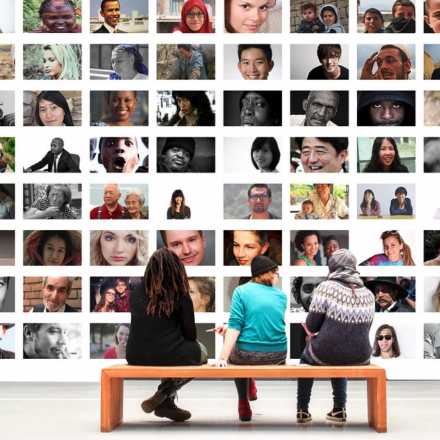
The Fiction of the Average User
One of the unexpected consequences of becoming a parent is discovering just how many things you thought you understood, but didn’t.
Before I had children, I believed I had a reasonably good grasp of how people interacted with the world around them. After all, I had spent years working in digital. I understood user journeys, accessibility, analytics, information architecture, conversion funnels, content strategy, and all the other disciplines that sit beneath the broad umbrella of user experience. Like many people who have worked in the industry for a long time, I had attended conferences, read the books, followed the research, and spent countless hours discussing how people use technology.
Then I became a parent.
Then those children turned out to be neurodivergent.
And somewhere between school meetings, education plans, gaming consoles, websites, apps, accessibility discussions, and the countless small moments that make up everyday family life, I began to realise there were things about human behaviour that no conference, framework, or design methodology had ever really taught me.
The lesson wasn’t about autism.
It wasn’t about ADHD.
It wasn’t even really about technology.
The lesson was about perspective.
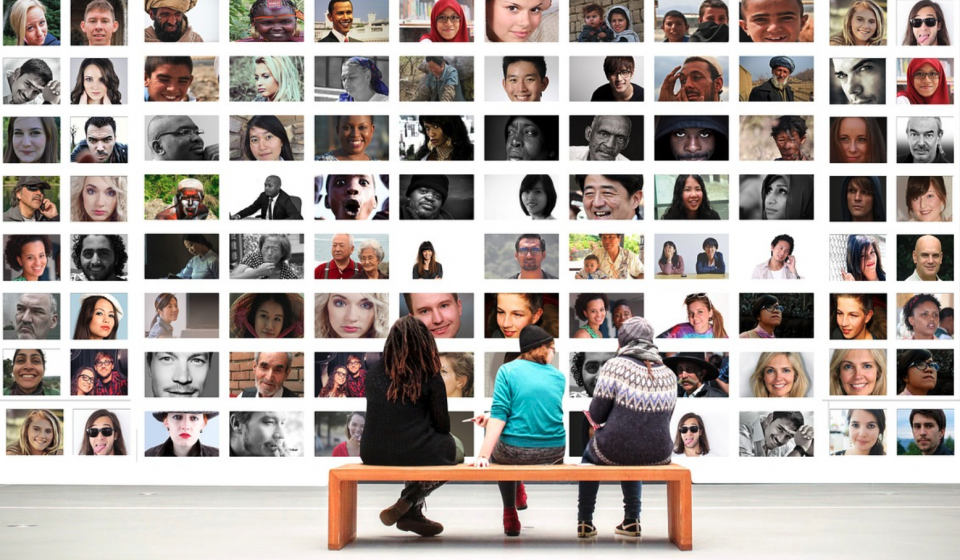
For years the digital industry has spoken about “the user” as though such a person actually exists. We create personas, build audience segments, map customer journeys, and analyse behavioural patterns in an attempt to understand how people interact with the products and services we create. There is enormous value in doing these things, but I sometimes wonder whether the language itself quietly encourages us to think about people in ways that are far simpler than reality allows.
The phrase “the user” suggests a degree of consistency that rarely exists in the real world.
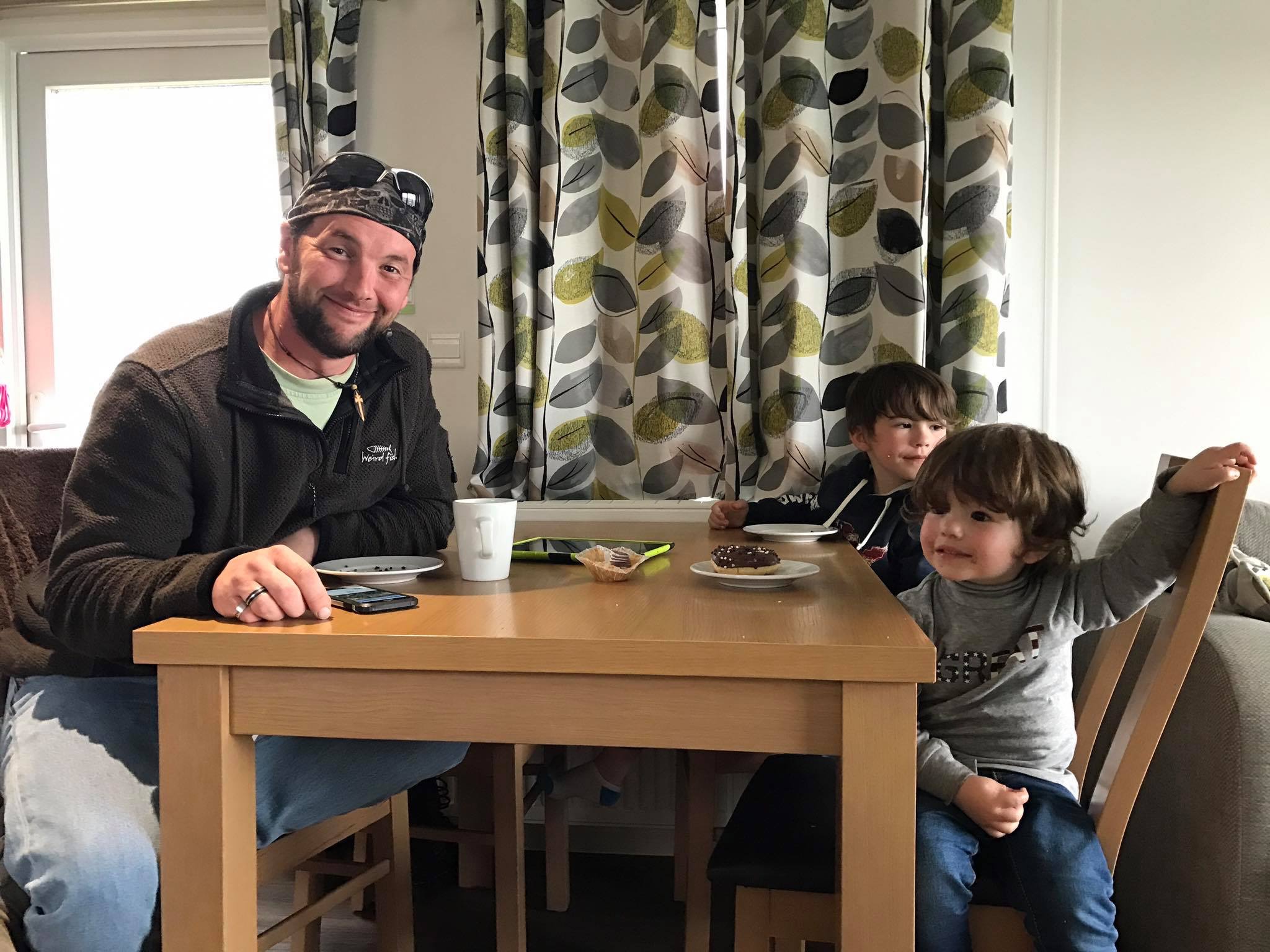
My sons taught me that.
My eldest son has always preferred clarity. He likes strong visual contrast, clear distinctions, obvious structure, and environments where important information stands out quickly. He wants to know where he is, what comes next, and what is expected of him. Ambiguity rarely serves him well. If something matters, he wants it to be visible. If there is a next step, he wants to know exactly where it is.
My youngest often experiences the same things differently.
What helps one can distract the other. What reassures one can overwhelm the other. What feels intuitive to one can feel frustrating to the other. What one notices immediately, the other may barely register at all.
Over the years I have watched them interact with the same websites, the same games, the same educational platforms, and sometimes even the same pieces of information. The reactions can be remarkably different. One immediately understands what is happening while the other struggles to orient himself. One finds a design engaging while the other finds it distracting. One notices information that the other completely overlooks.
Neither is right.
Neither is wrong.
They are simply experiencing the same thing through different lenses.
At first, I viewed these differences through the lens of neurodiversity. That seemed the obvious explanation. Yet as time goes by, the less convinced I am that this is really a story about neurodiversity at all.
I think neurodiversity simply made something visible that exists throughout humanity.
None of us experience the world in quite the same way.
The longer I spend working in digital, the more convinced I become that one of the biggest mistakes we make as designers, developers, marketers, product owners, and digital leaders is assuming that other people experience things as we do. Not consciously, of course. Most of us genuinely care about users. We conduct research, analyse data, build personas, map journeys, and test assumptions. Yet despite all of that effort, we still spend a remarkable amount of time projecting our own preferences onto the people we are trying to serve.
- If a website feels intuitive to us, we assume it is intuitive.
- If a process feels straightforward, we assume it is straightforward.
- If an instruction seems clear, we assume it is clear.
Then somebody struggles with it and we wonder why.
The truth is that most of us spend our lives trapped inside a single perspective: our own. We experience the world through our own senses, our own history, our own preferences, our own strengths, and our own challenges. We become so familiar with our own way of thinking that it quietly begins to feel normal.
That word, normal, is one I have become increasingly suspicious of over the years.
As parents of neurodivergent children, we spend a great deal of time navigating systems that have strong opinions about what normal looks like. Schools have expectations. Healthcare systems have expectations. Social groups have expectations. Society, in general, has expectations.
Most of those expectations are well-intentioned. The problem is that they are often built around averages.
- Average behaviour.
- Average communication.
- Average attention spans.
- Average ways of learning.
- Average ways of processing information.
- Average ways of interacting with the world.
The difficulty, of course, is that averages only really exist when you’re looking at a spreadsheet.
They rarely exist when you’re looking at a person.
One of the most humbling experiences as a parent is realising that fairness and sameness are not the same thing. For years many of our systems have been built around the assumption that treating everybody the same is the fairest approach. Yet watching my children navigate the world taught me something very different. The support that enables one child to thrive can become a barrier for another. The communication style that helps one understand can leave another confused. The environment that feels calm and predictable to one person can feel restrictive or overwhelming to somebody else.
Once you begin noticing this, you start seeing it everywhere.
- You see it in schools.
- You see it in workplaces.
- You see it in healthcare.
- You see it in public services.
And you certainly see it in digital experiences.
The irony is that the digital industry often talks about personalisation whilst simultaneously designing for averages. We segment audiences, create personas, and build customer journeys, yet we still find ourselves searching for the optimal path, the ideal layout, the perfect experience. Implicit within all of these conversations is the belief that if we gather enough information, we can eventually identify the right answer.
What my children taught me is that there often isn’t a right answer.
There are simply different people.
The same screen can create confidence in one person and anxiety in another. The same piece of information can feel clear to one person and confusing to somebody else. The same journey can feel seamless to one user and exhausting to the next.
That doesn’t mean we stop trying to improve experiences. Far from it. What it means is that we approach the challenge with a little more humility.
The older I get, the less interested I become in designing experiences that reflect how I think, and the more interested I become in understanding how other people think.
That shift sounds small, but it changes everything.
Because once you stop asking, “How would I use this?” and start asking, “How might somebody else experience this?”, the entire conversation changes.
- Accessibility changes.
- Design changes.
- Communication changes.
- Leadership changes.
And perhaps most importantly, our understanding of people changes.
Looking back, I think that was the first and most important lesson neurodiversity taught me.
Not that some people experience the world differently.
But that everybody does, and the challenge is that most of the time, we simply don’t notice.
The World Was Built for an Imaginary Person
The more I reflected on these differences, the more I realised they extended far beyond neurodiversity.
The same assumptions appear in schools, workplaces, healthcare systems, public services, and technology. In each case, there is often an underlying belief that a “typical” person exists and that systems can be designed around them.
The challenge is that typical people are remarkably difficult to find.
One of the things parenting taught me is the gap that often exists between how systems are designed and how real people actually live. Systems tend to favour predictability. People tend to be unpredictable. Systems prefer consistency. People are wonderfully inconsistent. Systems like clear categories. Human beings rarely fit neatly into them.
Education is perhaps one of the clearest examples.
Schools have to operate at scale. They have timetables, processes, expectations, policies, and frameworks. None of that is inherently wrong. In fact, much of it is necessary. Yet when you spend years navigating educational systems with neurodivergent children, you begin to notice how many assumptions sit beneath those structures. Assumptions about attention, communication, behaviour, learning, and engagement.
The more time I spent advocating for my children, the more I realised that many barriers were not created by an absence of support. They were created by an absence of understanding.
The same thing happens in digital.
One of the most common phrases I hear during website reviews is:
“Users should…”
- Users should click here.
- Users should understand this.
- Users should know what that means.
- Users should follow this journey.
- Users should complete this process.
The phrase itself often reveals the problem. It focuses on how we expect people to behave rather than how people actually behave.
In reality, users rarely follow the path we imagined for them.
- Some skim.
- Some read every word.
- Some arrive halfway through a journey.
- Some have no prior knowledge.
- Some have too much information.
- Some are distracted.
- Some are anxious.
- Some are simply having a bad day.
One of the reasons I became increasingly interested in accessibility was because it forced me to confront these realities more honestly.
Accessibility asks uncomfortable questions.
- What happens if somebody cannot see this?
- What happens if somebody cannot hear this?
- What happens if somebody cannot use a mouse?
- What happens if somebody struggles to process large amounts of information?
- What happens if somebody interprets this differently than intended?
The interesting thing is that once you start asking those questions, they don’t remain confined to accessibility.
They become questions about humanity.
- What happens if somebody is exhausted?
- What happens if somebody is stressed?
- What happens if somebody is grieving?
- What happens if somebody is trying to complete this task while caring for children, managing work, worrying about money, or dealing with a health problem?
Suddenly accessibility stops being about edge cases and it starts becoming a recognition that human beings are complicated.
One of the most valuable lessons I have learned over the years is that users do not arrive at our websites as empty vessels waiting to engage with our content. They arrive carrying the rest of their lives with them.
- The prospective student researching universities may also be caring for a family member.
- The parent completing an application form may also be managing work deadlines.
- The person reading an article may be exhausted after a twelve-hour shift.
- The individual browsing your website may be carrying fears, responsibilities, hopes, worries, distractions, and pressures that you will never know about.
Yet all of those things influence how they experience what we create.
This is one of the reasons I have become increasingly sceptical of the phrase “user error.”
Sometimes people make mistakes, but far more often, I think systems fail to account for reality.
- A form that requires perfect concentration is not necessarily well designed.
- Instructions that only make sense when read slowly and carefully are not necessarily clear.
- A process that only works when somebody has unlimited time, attention, and confidence is not necessarily intuitive.
Many of the challenges we describe as user errors are often moments where reality collides with assumption.
The user is behaving like a human being, but the system expected something else.
What fascinates me is that the digital industry often acknowledges this in theory while continuing to ignore it in practice.
- We talk about human-centred design.
- We discuss empathy.
- We conduct research.
- We create personas.
Yet we still find ourselves searching for the perfect journey.
- The ideal flow.
- The optimal experience.
As though somewhere there exists a single route that works equally well for everyone.
The more I search, the less convinced I become that such a thing exists. Increasingly, I think the goal is not to create the perfect path. It is to create enough clarity, flexibility, and understanding that different people can find their own way through.
That is a subtle distinction, but an important one.
Because it shifts the focus away from controlling behaviour and towards supporting people. And, at its heart, I suspect that is what accessibility has always been trying to teach us.
Why Modern Digital Experiences Feel Exhausting
One of the most interesting things that neurodiversity has taught me is that attention is not an unlimited resource. That sounds obvious, yet much of the modern digital world appears to have been built on the assumption that it is.
The more I think about it, the more I find myself wondering whether many of our digital experiences are solving the wrong problem.
For years, organisations have focused on attracting attention. Entire industries have been built around it. Marketing teams want attention. Content creators want attention. Social platforms want attention. Advertisers want attention. Product teams want attention. Every website, app, notification, email, advertisement, banner, video, chatbot, popup, and alert is competing for a finite amount of human attention.
Yet very few people seem to be asking what happens when everybody is competing at the same time.
When I was younger, I often thought user experience was primarily about helping people find information and complete tasks. Whilst I still believe that is true, I have come to realise there is another responsibility that is talked about far less frequently.
- Protecting attention.
- Not capturing it.
- Protecting it.
- The distinction matters.
Watching my children interact with technology over the years has been fascinating because it has highlighted how differently attention can operate from one person to another. What one child barely notices can completely derail the concentration of the other. A small interruption that feels insignificant to one person can become enough to break somebody else’s focus entirely.
The interesting thing is that these observations are not limited to neurodivergent people. Once I started paying attention, I began noticing the same thing everywhere.
- In colleagues.
- In friends.
- In family.
- In myself.
Particularly in myself.
Because whilst we often talk about attention as though it is a personal skill, attention is also heavily influenced by context.
- How much sleep have you had?
- How stressed are you?
- How many decisions have you already made today?
- What else is occupying your mind?
- How much emotional energy are you carrying?
- How many competing demands are pulling at your focus?
These things matter.
In fact, I would argue they matter far more than most digital experiences acknowledge.
One of the reasons I have become increasingly interested in cognitive load is because it offers a useful lens through which to view these questions. Cognitive load is often described as the amount of mental effort required to complete a task. The definition is straightforward. The reality is considerably more complicated.
Because users do not arrive with empty minds.
They arrive carrying the rest of their lives with them.
- A student researching universities may already be thinking about exams, finances, accommodation, family expectations, and the uncertainty that naturally accompanies major life decisions.
- A parent completing an application form may simultaneously be helping with homework, preparing dinner, answering questions, and mentally working through tomorrow’s responsibilities.
- A person trying to access healthcare information may already be frightened before they even reach the website.
- Someone researching support services may be doing so on one of the worst days of their life.
These realities rarely appear in analytics dashboards.
They are invisible to conversion reports.
Heatmaps do not reveal them.
Yet they shape every interaction people have with the systems we create.
This is why I sometimes find myself frustrated by modern digital design. Not because technology has become more sophisticated. But because somewhere along the way, many experiences became louder.
- Websites autoplay videos before visitors have had a chance to understand where they are.
- Cookie banners compete with newsletter sign-ups.
- Chatbots appear before users have even read the first paragraph.
- Notifications interrupt.
- Animations move continuously in peripheral vision.
- Pop-ups appear moments after arrival.
- Carousels rotate automatically.
- Everything seems designed to attract attention.
Very little seems designed to respect it.
The irony is that many of these features are introduced with good intentions. Nobody sits in a meeting and announces their desire to make a website more frustrating. The objective is usually engagement. The challenge is that engagement and interruption are not the same thing.
When attention is already stretched, every additional demand carries a cost.
- One extra decision.
- One additional notification.
- One unnecessary animation.
- One more thing competing for focus.
Individually these things appear insignificant. Collectively they create friction.
What fascinates me is how often that friction is invisible to the people creating it.
- If a page loads successfully, the feature is considered successful.
- If a banner receives clicks, the banner is considered effective.
- If a chatbot generates interactions, the chatbot is considered useful.
Yet none of those measurements tell us how much energy the experience required from the people using it.
- They do not tell us how many interruptions occurred.
- They do not tell us how much concentration was lost.
- They do not tell us how many people quietly abandoned the task because it demanded more mental effort than they had available that day.
The more I think about it, the more I believe good user experience is not simply about helping people achieve their goals. It is about doing so with as little unnecessary effort as possible.
That sounds simple. It isn’t.
Because unnecessary effort takes many forms.
- Sometimes it is poor navigation.
- Sometimes it is confusing language.
- Sometimes it is inaccessible design.
- Sometimes it is the accumulation of countless small distractions that seem harmless in isolation but exhausting in combination.
The challenge is that digital teams often experience their products under ideal conditions. We know where things are. We understand the terminology. We are familiar with the journey. We are focused on the task.
Real users rarely enjoy those advantages.
- They arrive distracted.
- Busy.
- Tired.
- Stressed.
- Curious.
- Confused.
- Hopeful.
- Anxious.
- Human.
Perhaps that is the lesson I keep returning to.
Attention is precious. Far more precious than many digital experiences treat it.
The longer I work in technology, the less interested I become in finding new ways to capture attention and the more interested I become in designing experiences that respect it.
Because when attention is respected, clarity improves and when clarity improves, understanding improves.
When understanding improves, people are more likely to succeed.
And ultimately, helping people succeed is what user experience was supposed to be about all along.
What Neurodiversity Revealed About Humanity
The longer I have reflected on these experiences, the less convinced I become that the lessons neurodiversity taught me are really about technology at all. Technology simply happens to be one of the places where those lessons become visible.
In reality, I think they apply almost everywhere.
One of the unexpected consequences of learning more about neurodiversity was discovering how often it challenged my own assumptions.
The deeper I looked, the harder it became to maintain the illusion that there is a single correct way to think, learn, communicate, or experience the world.
Instead, I found myself becoming increasingly fascinated by difference itself.
Not difference as a problem to be solved but difference as a reality to be understood.
For much of modern history, systems have tended to favour standardisation. We create processes because processes bring consistency. We create categories because categories help us organise complexity. We establish norms because norms make large groups of people easier to manage.
None of these things are inherently wrong. The difficulty arises when we begin mistaking the model for reality. Human beings are wonderfully resistant to standardisation.
- We do not learn at the same pace.
- We do not communicate in the same way.
- We do not process information identically.
- We do not experience environments equally.
- We do not respond to stress, uncertainty, change, or challenge in the same manner.
And yet so many of the systems we interact with every day continue to operate as though we do. What I find particularly interesting is that this tendency extends far beyond education and technology.
- It appears in workplaces.
- It appears in healthcare.
- It appears in government services.
- It appears in relationships.
- It appears in leadership.
In many ways, leadership itself can become an exercise in assumptions.
Early in my career, I suspect I made the same mistake many new leaders make. I assumed that what motivated me would motivate others. I assumed that what felt clear to me would feel clear to everybody else. I assumed that the communication styles I preferred would naturally work for the people around me.
Experience taught me otherwise.
- Some people need detailed context before making decisions. Others prefer concise information and autonomy.
- Some thrive when given freedom and flexibility. Others perform at their best when expectations are clearly defined.
- Some process information verbally. Others need time to reflect.
- Some welcome challenge openly. Others prefer quieter conversations.
Neither approach is better. Neither approach is worse.
They are simply different.
The lesson is remarkably similar to the one my children taught me years earlier whilst using technology. What works brilliantly for one person may not work at all for another. Once you truly understand this, empathy begins to look very different.
For many years I thought empathy meant understanding how somebody feels. Today I think it is something slightly different.
I think empathy is recognising that somebody else’s experience of the world may be fundamentally different from your own, even when you are both standing in exactly the same place.
That distinction matters.
- It changes how we communicate.
- It changes how we lead.
- It changes how we design.
- It changes how we educate.
Most importantly, it changes how we listen.
One of the reasons neurodiversity has had such a profound impact on my thinking is because it continually challenges the temptation to assume.
- Assume understanding.
- Assume intention.
- Assume motivation.
- Assume behaviour.
- Assume capability.
- Assume preference.
The reality is that assumptions are often where misunderstanding begins.
- When somebody struggles with a process, we assume they were not paying attention.
- When somebody reacts differently to an environment, we assume they are being difficult.
- When somebody communicates in a way that feels unfamiliar, we assume they are wrong.
Yet in many cases, the issue is not the person. The issue is the gap between our assumptions and their reality.
The more I have observed neurodiversity, both within my family and within myself, the more convinced I have become that many of the challenges we encounter are not failures of intelligence, effort, or capability.
They are failures of understanding.
- Failures to recognise that people experience the world differently.
- Failures to create enough flexibility for those differences to exist.
- Failures to question our own perspective.
And perhaps that is why accessibility resonates with me so strongly.
- Not because it is about websites.
- Not because it is about compliance.
- Not because it is about technology.
But because accessibility, at its heart, is an acknowledgement of human diversity.
It is a recognition that people are not identical.
That they never were.
And that designing systems, environments, workplaces, and experiences which acknowledge that reality is not an act of accommodation.
It is an act of respect.
The irony is that the more time I have spent trying to understand difference, the more connected I have felt to people in general.
Because beneath all the variation, complexity, and individuality, there is something surprisingly universal.
So what was this about?
When I first began thinking about writing this article, I assumed it was going to be about neurodiversity. Somewhere along the way, I realised it wasn’t. Or at least, not entirely.
Neurodiversity may have been the lens through which I learned these lessons, but the lessons themselves extend far beyond autism, ADHD, accessibility, or user experience.
They are ultimately lessons about people.
For much of my career I believed user experience was primarily about making technology easier to use. Whilst that is certainly part of it, I now think the discipline asks something much bigger of us.
It asks us to recognise that other people experience the world differently than we do.
Not occasionally.
Not exceptionally.
Consistently.
Every person arrives carrying their own experiences, strengths, challenges, preferences, fears, expectations, responsibilities, and ways of making sense of the world. Those things shape every interaction they have, whether they are navigating a website, completing a form, reading an email, applying for a course, speaking to a colleague, or simply trying to get through the day.
The challenge is that most of these things are invisible.
- We cannot see somebody’s stress levels.
- We cannot see their exhaustion.
- We cannot see their anxiety.
- We cannot see the demands competing for their attention.
- We cannot see the years of experiences that have shaped how they think, learn, communicate, and process information.
Yet all of those things are present, and all of them influence how people experience the systems we create.
Perhaps that is why I have become increasingly cautious of certainty. Less interested in claiming to know how users behave, and more interested in understanding how differently people can experience the same thing.
Because once you begin to appreciate the diversity of human experience, many assumptions start to fall away.
- The idea of the average user becomes harder to believe.
- The idea of a perfect journey becomes harder to define.
- The idea that one solution will work equally well for everybody begins to feel increasingly unrealistic.
And yet, strangely, this realisation has not made user experience more complicated for me. It has made it simpler.
The goal is no longer to create the perfect experience. The goal is to create experiences that are clear, respectful, flexible, and considerate enough that more people can succeed.
- To create systems that work with human diversity rather than against it.
- To design with humility rather than assumption.
- To recognise that difference is not an edge case to be accommodated but a reality to be understood.
Looking back, I sometimes think the most important lesson my children ever taught me was not that people are different.
I think I knew that already.
The lesson was that difference runs far deeper than most of us realise.
That two people can look at exactly the same thing and experience it in completely different ways. That understanding somebody else’s perspective requires far more curiosity than certainty. And that perhaps the most important question we can ask, whether we work in technology, education, leadership, accessibility, or simply life itself, is not:
“Why doesn’t this person see things the way I do?”
But:
“What might they be seeing that I cannot?”
For me, that question changed everything.
- It changed the way I think about accessibility.
- It changed the way I think about user experience.
- It changed the way I think about leadership.
Most importantly, it changed the way I think about people. And in a world that often seems determined to simplify human beings into categories, personas, segments, demographics, and data points, that feels like a lesson worth holding on to.
Neurodiversity did not teach me that some people are different. It taught me that everybody is different.
And once you truly understand that, it becomes impossible to see user experience, accessibility, leadership, or even people in quite the same way again.
What This Means for Design
If there is one question that naturally follows everything I have written so far, it is this:
What should we actually do with this knowledge?
If there is no average user, if people experience the world differently, if attention is finite, and if accessibility is really about understanding human diversity, how should that influence the way we design digital experiences?
The first answer is perhaps the least satisfying: We need to become comfortable with the fact that there is no perfect solution.
For many years, the digital industry has been searching for best practice. We look for frameworks, design patterns, optimal journeys, and proven approaches. There is value in all of these things, but they can sometimes create the illusion that user experience is a puzzle waiting to be solved.
It isn’t.
It is an ongoing conversation between the people creating experiences and the people using them.
The goal is not perfection. The goal is understanding.
That shift in thinking changes the questions we ask.
Instead of asking: “How do we get users to behave the way we want?” We begin asking: “What might be preventing people from succeeding?”
Instead of asking: “What is the most efficient journey?” We ask: “What barriers might different people encounter along the way?”
Instead of asking: “What is the right answer?” We ask: “Who might this work well for, and who might we be unintentionally excluding?”
They sound like subtle differences.
They aren’t.
Those questions lead to entirely different decisions.
One of the most important lessons I have learned from both accessibility and neurodiversity is that flexibility is often more valuable than optimisation.
The digital world frequently rewards optimisation. Faster journeys. Fewer clicks. Reduced friction. Increased conversion rates.
All worthwhile goals.
Yet in our pursuit of efficiency, we sometimes remove the very things that help people succeed.
- Some users need additional context before making a decision.
- Some need reassurance.
- Some need structure.
- Some need flexibility.
- Some need information presented visually.
- Others prefer written explanations.
- Some want to move quickly.
- Others need time to process.
Good design recognises these differences and creates enough flexibility to accommodate them.
Not unlimited flexibility. That would create chaos.
Thoughtful flexibility.
- The ability to pause moving content.
- The ability to access information in different ways.
- The ability to navigate without unnecessary barriers.
- The ability to move at your own pace.
- The ability to recover when mistakes happen.
- The ability to succeed without needing to think exactly like the people who designed the system.
I often think the best digital experiences share a common characteristic. They are generous.
- Generous with information.
- Generous with clarity.
- Generous with support.
- Generous with recovery.
- Generous with choice.
- They do not assume that everybody knows what they know.
- They do not punish mistakes.
- They do not demand perfection.
They quietly help people move forward.
Another lesson that has become increasingly important to me is the value of reducing unnecessary cognitive load.
- Every decision we ask somebody to make requires effort.
- Every interruption demands attention.
- Every piece of jargon requires interpretation.
- Every unexpected interaction requires processing.
Individually, these things seem insignificant.
Collectively, they can become overwhelming.
Whenever I review a website, application, or process, I find myself asking a simple question:
“How much work are we asking the user to do?”
Not physical work.
- Mental work.
- Emotional work.
- Cognitive work.
Because the reality is that most people arrive carrying enough of that already.
They do not need us adding more.
Perhaps the most practical thing any designer, developer, content creator, marketer, or digital leader can do is spend less time thinking about systems and more time thinking about circumstances.
- Who is this person?
- What might they be experiencing today?
- What might they be worried about?
- What assumptions are we making about their knowledge, confidence, attention, environment, or ability?
- What happens if those assumptions are wrong?
I have found that some of the most valuable accessibility conversations begin there.
- Not with guidelines.
- Not with compliance.
- Not with technology.
With curiosity. Because curiosity forces us to acknowledge that we may not have all the answers. It encourages us to explore perspectives beyond our own.
And ultimately, every lesson in this article seems to lead back to that same idea. I am becoming more convinced that good user experience is not created by clever technology, sophisticated frameworks, or perfect journeys. Those things help. But they are not where it begins.
Good user experience begins with humility.
With accepting that our experience of the world is only one experience amongst billions. With recognising that people think differently, learn differently, communicate differently, and navigate life differently.
And with designing in a way that respects those differences rather than trying to eliminate them.
If neurodiversity taught me anything, it is that human diversity is not a problem to solve.
It is a reality to design for.
And perhaps, in the end, that is the simplest definition of user experience I have ever found.







Really enjoyed this.
The idea that the “average user” doesn’t actually exist is something more people in digital, product and marketing need to think about. We spend so much time building for personas and averages that it’s easy to forget we’re designing for real people with very different contexts and experiences.
The neurodiversity perspective made that point even more powerful.
Great perspective.